
Custom Metal Enclosures and Parts for Electronics Hardware
Sheet metal fabrication, CNC machining, and die casting — from single prototype parts to production runs, integrated with PCBA assembly and plastic enclosure production.
Services › Metal Parts & Enclosures
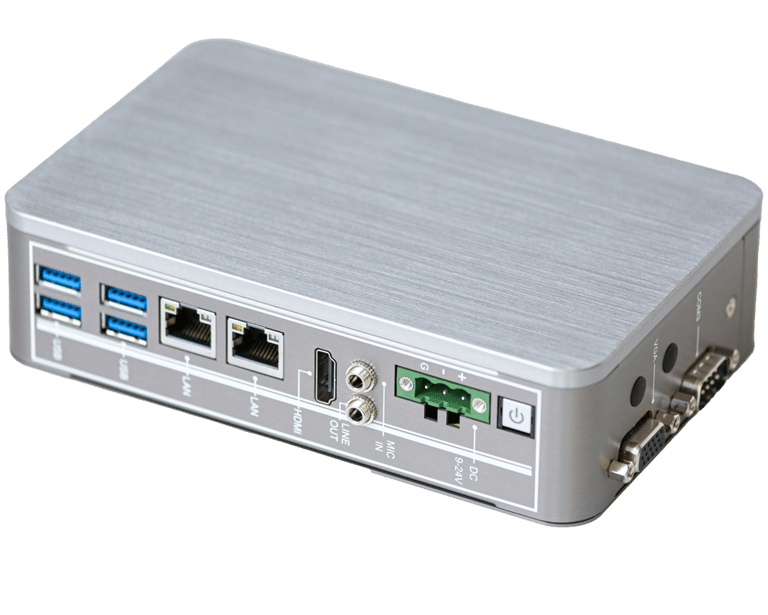
Sheet Metal
CNC Machining
Die Casting
Laser Cutting
Surface Finishing
Extrusion
Aluminum · Steel · Stainless · Brass · Copper | Prototypes from 1 piece | Surface finishing included
PROCESSES
Three metal fabrication processes — which is right for your product?
Sheet metal, CNC machining, and die casting serve different product requirements, volumes, and budgets. Understanding the differences helps you specify the right process — and get an accurate quote first time.
Sheet Metal Fabrication
Sheet metal starts as flat stock — steel, aluminum, or stainless — that is laser-cut or punched to shape, then formed into 3D geometry using CNC press brakes. The result is a rigid, precise enclosure assembled with hardware, welding, or clinching.
See detailed specifications and materials for each process in our capabilities section.
Materials: Al, Steel, SS, Brass, Copper
Thickness range: 0.5mm – 6.0mm
Bend radius: 1× material thickness min
Hole tolerance: ±0.1mm typical
Minimum quantity: 1 piece
Prototype lead time: 5–8 business days
BEST FOR: Enclosures, chassis, mounting brackets, rack panels, heatsink fins, RF shielding enclosures
NOT IDEAL FOR: Complex 3D geometry, features requiring ≥3 bend operations on same face, cosmetically critical A-surfaces


CNC Machining


CNC machining removes material from a solid billet using multi-axis cutting tools — producing parts with complex internal geometry, precise dimensions, and excellent surface finish. Material is cut, not formed, so there is no tooling cost and no minimum quantity.
Die casting forces molten metal — typically aluminum or zinc alloy — into a hardened steel die under high pressure. Once solidified, the part is ejected with near-net-shape geometry. Tooling cost is significant but per-part cost at volume is very low.
Materials: Al 6061/7075, Steel, SS 304/316, Brass, Cu
Dimensional tolerance: ±0.05mm standard · ±0.02mm precision
Surface roughness: Ra 1.6μm standard · Ra 0.4μm precision
Minimum quantity: 1 piece — no tooling required
Prototype lead time: 5–10 business days
Max part size: 600 × 400 × 300mm typical
BEST FOR: Precision housings, heatsinks, structural brackets, RF cavities, prototype enclosures, small-series production
NOT IDEAL FOR: High-volume production (cost doesn't scale well), very thin-walled large parts, parts requiring undercuts accessible only from 5+ sides


Die Casting
BEST FOR: High-volume enclosures (1,000+ units), complex thin-walled geometry, integrated heat dissipation features, consumer electronics outer shells
NOT IDEAL FOR: Low volume (tooling cost not recoverable), very large parts (machine tonnage limits), materials requiring high-temperature resistance
Materials: Aluminium alloys (ADC12), Zinc (Zamak 3/5)
Dimensional tolerance: ±0.1mm typical · ±0.05mm with secondary ops
Wall thickness: 0.8mm – 6.0mm typical
Tooling cost: From $1,000 per die
Minimum quantity: 1,000 units (tooling amortization)
Production lead time: 4–6 weeks tooling · 2–3 weeks production
Many products use more than one process — a sheet metal chassis with CNC-machined mounting features, or a die-cast housing with CNC secondary operations for critical fits. Tell us what your product needs and we'll recommend the right combination.
CAPABILITIES & MATERIALS
Specifications and materials across all three processes
Detailed process specifications and material properties for sheet metal fabrication, CNC machining, and die casting — everything needed to evaluate manufacturability before submitting a design.
Sheet Metal Fabrication
LASER · PUNCH · BEND · WELD
Process and material confirmed at DFM review — before any tooling or production cost is committed.
PROCESS SPECIFICATIONS
Materials: Aluminum (5052, 6061) · Cold-rolled/Galvanized steel · SS 304/316 · Brass · Copper
Material thickness: 0.5mm – 6.0mm standard · up to 12mm for laser cutting without forming
Laser cutting tolerance: ±0.1mm typical · ±0.05mm precision laser
Punching tolerance: ±0.15mm typical
Bend tolerance: ±0.5° angle · ±0.3mm flange length
Minimum hole diameter: 1× material thickness (t)
Minimum bend flange: 3× material thickness (t)
Minimum inside bend radius: 0.5–1× material thickness (t)
Assembly methods: Hardware insertion · TIG/MIG weld · Clinching · Riveting
Max sheet size (laser): 1500 × 3000mm
Surface finish: Powder coat · Anodize (Al only) · Brush · Chrome plate · Zinc plate
IPC standard: N/A — dimensional per drawing · GD&T per ASME Y14.5
Equipment: CNC press brakes to 200 ton · Fiber laser cutting · TIG and MIG welding · Hardware insertion press
Equipment: 3-axis VMC · 4-axis index · 5-axis machining centre · CMM quality inspection
Materials: Al 6061-T6, 7075-T6, 2024 · Steel 1045, 4140 · SS 303, 304, 316L · Brass C360 · Copper C110 · Titanium on request
Standard tolerance: ±0.05mm (±0.002")
Precision tolerance: ±0.02mm (±0.001") for critical features
Surface roughness: Ra 1.6μm standard · Ra 0.8μm fine · Ra 0.4μm precision
Min wall thickness: 0.8mm aluminium · 1.0mm steel
Min internal radius: 0.5mm (depends on tool diameter)
Max part size: 600 × 400 × 300mm (3-axis) · 400 × 300 × 300mm (5-axis)
Min quantity: 1 piece — no tooling or setup charge at low volume
Thread types: Metric (M2–M64) · UNC/UNF · Helicoil inserts available
Deburring: Manual and vibratory deburring standard on all parts
Inspection: CMM inspection available · First article with report on request
GD&T: Per ASME Y14.5 · ISO 2768 fine grade standard
CNC Machining
3-AXIS · 4-AXIS · 5-AXIS
Aluminum alloys: ADC12 (most common) · A380 · A360 · A413
Zinc alloys: Zamak 3 · Zamak 5 · Zamak 7
Standard tolerance: ±0.1mm for non-critical · ±0.05mm with secondary CNC
Min wall thickness: 0.8mm aluminium · 0.4mm zinc alloy
Max wall thickness: 6.0mm (above this, use shrinkage precautions)
Draft angle: 0.5°–1° per side for cosmetic · 1°–3° for structural
Surface roughness: Ra 1.6–3.2μm as-cast · Ra 0.8μm with secondary machining
Tooling material: H13 hardened steel · P20 for lower volume
Shot life: H13: 500,000–1,000,000 shots · P20: 100,000–300,000
Secondary operations: CNC machining · Drilling · Tapping · Tumble deburring
Surface treatment: Shot blast · Powder coat · Paint · Chrome plate · Anodize (Al alloys only, note below)
Min production quantity: 1,000 units — below this, tooling cost typically not recoverable
Die Casting
AL ALLOY · ZINC ALLOY
Equipment: Die casting machines 160–800 tonne · Trim press · Shot blast · CNC secondary machining
MATERIALS
Aluminum
5052 · 6061 · 7075
WEIGHT: 2.7 g/cm³ — lightest structural metal
STRENGTH: 6061-T6: 276 MPa · 7075-T6: 503 MPa
CORROSION: Excellent — self-passivating oxide layer
MACHINABILITY: Excellent — fastest to machine
Process compatibility:
Sheet ● · CNC ● · Die Cast ●TYPICAL APPLICATIONS:
Enclosures, heatsinks, chassis, RF cavities, structural brackets, prototype housings
WEIGHT: 7.85 g/cm³ — heavy but strong
STRENGTH: 1018: 440 MPa · 1045: 625 MPa
CORROSION: Poor uncoated — requires surface treatment
COST: Lowest of all structural metals
Process compatibility:
Sheet ● · CNC ● · Die Cast ○TYPICAL APPLICATIONS:
Structural chassis, heavy-duty enclosures, magnetic shielding, mounting brackets
Steel
SPCC · 1018 · 1045
WEIGHT: 7.9 g/cm³
STRENGTH: 304: 515 MPa · 316: 485 MPa
CORROSION: Excellent — resists most acids and chlorides
MACHINABILITY: Moderate — harder to machine than mild steel
Process compatibility:
Sheet ● · CNC ● · Die Cast ○TYPICAL APPLICATIONS:
Medical equipment housings, food-safe enclosures, marine electronics, chemical-resistant panels
Stainless Steel
304 · 316 · 316L
WEIGHT: 8.5 g/cm³
STRENGTH: C360: 385 MPa
CONDUCTIVITY: Good electrical and thermal conductor
MACHINABILITY: Excellent — free-machining C360
Process compatibility:
Sheet ● · CNC ● · Die Cast ◐TYPICAL APPLICATIONS:
RF connectors, EMI shielding components, precision hardware, decorative electronics panels
Brass
C360 · C260
WEIGHT: 8.96 g/cm³ — heaviest common metal
THERMAL: 401 W/m·K — excellent heat spreader
CONDUCTIVITY: 100% IACS — highest electrical conductivity
MACHINABILITY: Good — softer than steel, work-hardens
Process compatibility:
Sheet ● · CNC ● · Die Cast ○TYPICAL APPLICATIONS:
Busbars, heatspreaders, RF shielding, high-current busbars, grounding straps, EMI gaskets
Copper
C110 · C101
WEIGHT: 6.6 g/cm³ — lighter than steel, heavier than Al
STRENGTH: Zamak 3: 283 MPa · Zamak 5: 331 MPa
MIN WALL: 0.4mm — thinnest walls achievable
FLUIDITY: Excellent — fills complex features
Process compatibility:
Sheet ○ · CNC ◐ · Die Cast ●TYPICAL APPLICATIONS:
Complex thin-walled housings, decorative covers, small precision enclosures, high-volume consumer electronics components
Zinc Alloy
Zamak 3 · Zamak 5
SURFACE FINISHING OPTIONS
Powder Coating
S● C● D●
Colour, corrosion protection, texture
Anodizing
S● C● D◐
Aluminium only · Hard or decorative
Brushing
S● C● D○
Satin texture · Cosmetic surfaces
Electroplating
S● C● D●
Chrome, nickel, zinc, gold
Shot Blasting
S● C● D●
Matte texture · Pre-treatment
Passivation
S● C● D○
Stainless steel · Removes free iron
Laser Engraving
S● C● D○
Permanent marking · Serial numbers
PRICING & LEAD TIMES
Realistic cost and timeline expectations
Indicative pricing ranges for sheet metal, CNC machining, and die casting — based on typical electronics enclosure complexity. Exact quotes require DXF, STEP, or DWG files.
Sheet Metal Fabrication
Most cost-effective for box enclosures — no tooling cost for laser cutting, low setup cost for bending.
Tier 1 — PROTOTYPE (1–10 PIECES):
$50 – $300 per part
Simple bracket or panel · Increases with complexity
Prototype lead time: 5–8 business days
Production lead time: 10–15 business days
Repeat order premium: None — same as first order
CNC Machining
Die Casting
Tier 2 — SMALL PRODUCTION (50–500 PCS):
$15 – $80 per part
Standard enclosure · Material + forming + finishing
Tier 3 — SETUP / FORMING DIES:
$0 – $500 per part type
Laser: $0 setup · Custom punching die: $200–500
Prototype from a single piece with no tooling cost — per-part cost is higher than other processes but unmatched for complexity and precision.
Tier 1 — SIMPLE PARTS (1–5 PIECES):
$80 – $300 per part
Simple geometry · Aluminium · Standard tolerance
Tier 2 — COMPLEX PARTS (1–5 PIECES):
$300 – $1,500 per part
Multiple setups · 5-axis · Tight tolerance · Hard material
Tier 3 — VOLUME (10–100 PIECES):
20-40% reduction vs single-piece price
Setup cost amortized · Program reused · Material efficiency
Prototype lead time: 5–10 business days
Repeat order lead time: 3–7 days (program saved)
Tooling / setup cost: Included in quoted price
High tooling cost offset by very low per-part cost at volume — economical only above 1,000 units per production run.
Tier 1 — TOOLING COST (ONE-TIME):
$2,000 – $5,000 per die
Simple single-cavity: from $5,000 · Complex multi-cavity: to $25,000+
Tier 2 — PER-PART COST (1,000+ UNITS):
$2 – $15 per part
Aluminium alloy · Medium complexity · Excludes secondary ops
Tier 3 — SECONDARY OPERATIONS:
$1-$8 per part additiional
CNC machining · Drilling · Tapping · Tumble deburr
Tooling lead time: 4–6 weeks
Production lead time: 2–3 weeks (after tooling approval)
Tooling ownership: Yours — stored at our facility
What drives metal fabrication cost
WHAT INCREASES COST
Tight tolerances
Complex geometry
Fine surface finish
Low volume
Threaded inserts and hardware
Custom alloys
WHAT REDUCES COST
Design for process
Standard alloys
Relaxed tolerances
Increase volume
Minimise setups
Submit complete files first time
Consolidate orders
The highest single impact on cost is material and process selection — designing in 6061 aluminium for sheet metal or CNC machining rather than stainless or titanium can reduce part cost by 40–60%.
Every quote is fixed-price — the price you agree to is the price you pay. We don't add charges after the quote is accepted, and we don't bill by the hour for machining time overruns. If we underestimate the complexity of a part at quoting stage, we absorb the difference.
The ranges shown on this page are starting points based on typical electronics enclosure complexity. A simple sheet metal bracket comes in at the lower end. A complex 5-axis machined aluminium housing with tight tolerances and fine surface finish comes in higher. Your part falls somewhere on that spectrum — the quote tells you exactly where.
DFM feedback is included with every quote at no charge. If your design has features that significantly increase cost — or features that could be modified to reduce cost without affecting function — we'll flag both in the quote response.
Ready to get a fixed-price quote? Send us your STEP, DXF, or DWG files and we'll respond within 48 hours.








Tell us about your metal part
Send your DXF, STEP, or DWG files with a description of your requirements — we'll respond with a fixed-price quote within 48 hours.
GET A QUOTE
DFM review included with every quote · Fixed-price guarantee · Response within 48 hours
SERVICES
Peakingtech © 2025. · Shenzhen, China · Privacy Policy · Terms of Service
Contact Form
Metal Parts


Peakingtech® is a registered trademark of Peakingtech Co in the United States.
COMPANY
CONTACT