
Why China Just Mandated Physical Buttons in Cars — and What It Means for Every Hardware Product Team
China's updated GB 4094 standard mandates physical controls for 19 core vehicle functions. Here's what the touchscreen reversal teaches hardware startups about control design, reliability architecture, and DFM — from an EMS/NPI perspective.
PRODUCT DEVELOPMENT
Peakingtech Engineering Team
7/9/20265 min read
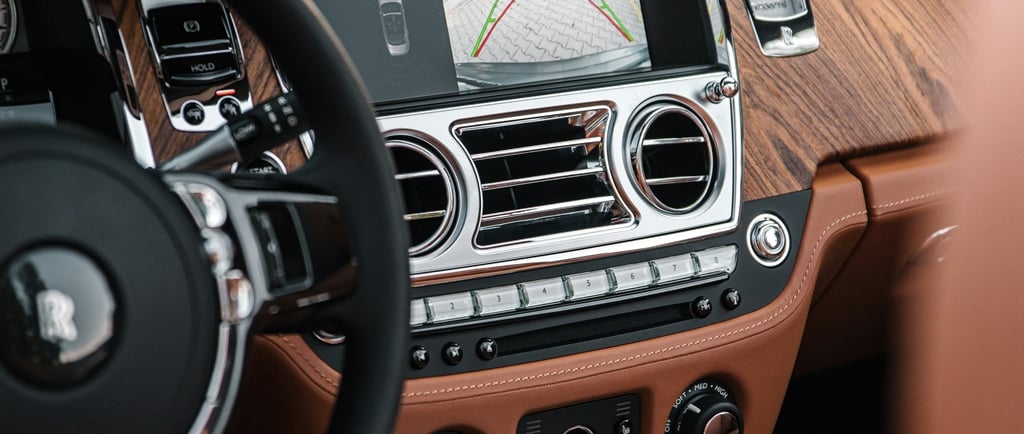
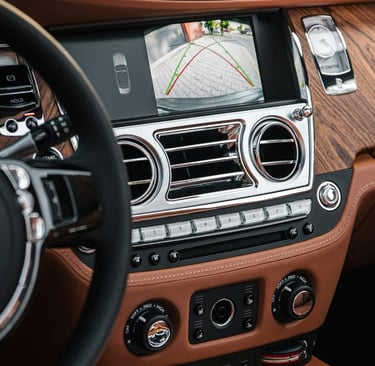
Ferrari's CEO put a number on the industry's worst-kept secret earlier this year: replacing traditional buttons with full touch control can cut a vehicle's interaction-related manufacturing cost by nearly half.
China's regulators just decided that saving wasn't worth it.
The updated national standard GB 4094 — covering automotive controls, indicators, and signaling devices — now requires physical controls for 19 core vehicle functions: gear selection, turn signals, hazard lights, horn, wipers, defrost and defog, power windows, and more. This is not a recommendation. It is a condition of market approval for newly certified vehicle models.
For a decade, the industry insisted that a single glass panel controlling everything was the future. It turns out the future has buttons.
At Peakingtech, we build electronics for hardware startups and product brands every day, and we think this regulation deserves attention far beyond the automotive industry. It is, in effect, a public design review of the last ten years of consumer electronics thinking — and the conclusions apply to almost any product with a user interface.
The Economics Nobody Put in the Press Release
Let's be honest about why the buttons disappeared in the first place.
A 12-inch automotive-grade center display with an operating system costs roughly ¥800–1,500 at purchase volume. That single component replaces dozens of switches — each with its own tooling investment, wiring harness runs, connectors, mechanical assemblies, and assembly labor. Industry estimates put the savings at 15–20% of smart cockpit development and production cost, which works out to thousands of yuan per vehicle at scale.
In a market where EV margins keep compressing, that is not a design philosophy. That is a cost-down program. The marketing achievement was presenting it as philosophy: fewer parts became "minimalism," and a cheaper cockpit became "tech-forward design."
We want to be fair here, because we sit on the manufacturing side of this equation. Cost-down is legitimate engineering — every good product team does it, and we help clients do it constantly. The problem is not reducing BOM cost. The problem is letting BOM cost quietly redefine a product's safety architecture and then calling the result a design language.
What the Regulation Actually Understood
The data behind China's reversal is difficult to argue with.
Infotainment system failures recently jumped to the top of the country's vehicle quality complaint rankings, with complaint share rising sharply year over year. UK transport research found that operating wipers through a touchscreen is dramatically slower than using a traditional stalk — precisely in the sudden-rain scenario where seconds matter most. And at highway speeds, locating a function buried in a third-level menu means moving your eyes off the road long enough to travel hundreds of meters effectively blind.
But the most consequential requirement in the new standard is not "add buttons back." It is this: critical controls must remain functional even if the central display system crashes or loses power.
That is not an ergonomics requirement. That is a systems architecture requirement. It means independent signal paths — not merely a switch that routes through the same domain controller as the screen. A capacitive panel that fails takes every function down with it. A tact switch fails alone.
Three Lessons for Any Hardware Product Team
If you design or build hardware of any kind — consumer devices, medical equipment, industrial controllers, smart appliances — this regulation is worth reading as a case study. Here is what we would tell any product team walking into our NPI process.
1. Classify your controls before you cost-optimize them
Some functions are safety-critical or time-critical: emergency stop, power cutoff, anything a user reaches for under stress or during a failure condition. Those functions deserve dedicated physical inputs with independent circuits. Convenience functions — settings, profiles, content browsing — can live comfortably in software.
The mistake we see repeatedly is optimizing both categories with the same spreadsheet. When the BOM review treats an emergency function and a settings menu as interchangeable line items, the architecture has already failed; the incident report just hasn't been written yet.
2. "Blind-operable" is a specification, not a vibe
GB 4094 formalizes what interaction designers have long known: muscle memory only forms around controls that stay put. The standard's requirements translate into concrete engineering language — fixed position, minimum physical dimensions, tactile landmarks, and feedback the user can feel or hear without looking.
This applies far beyond the dashboard. If a nurse might need it during a procedure, if an operator might need it while watching a machine, if a home cook might need it with wet hands and eyes on a pan — it needs to be findable and confirmable without visual attention.
3. Physical controls are a reliability architecture, not nostalgia
Electronic components carry real, quantifiable failure rates. When your entire interface is one panel, that panel's failure rate becomes your product's failure rate — a single point of failure dressed up as elegance. Mechanical switches, rotary encoders, and dedicated hard keys are not a retreat from technology. They are redundancy, and redundancy is what mature engineering looks like.
There is also a user-trust dimension that rarely shows up in spec sheets. A physical control confirms its own actuation: you feel the click, you know it registered. A touch target leaves the user guessing — did the tap land, or do I press again and accidentally cancel what I just did? That ambiguity is a real cost, paid in support tickets and returns.
The Manufacturing Reality: Buttons Must Be Engineered Early
Here is the part of this story that lands on our desks at Peakingtech.
Physical controls cannot be bolted on late. Switch selection — membrane versus tact versus rotary encoder — is a cost-feel-lifecycle trade-off that shapes the electrical design. Panel cutouts affect the enclosure tooling. Sealing requirements interact with IP ratings. Actuation force, travel, and key wobble define perceived quality as much as any spec on the datasheet. Wiring and connector choices ripple through the assembly process.
Teams that treat "add a button" as a late-stage change order discover, expensively, that it is actually a re-spin: new tooling, new stack-up, new DFM review, new certification samples.
This is exactly why control architecture belongs in the earliest NPI conversations — before the industrial design is locked, before tooling is cut, before the BOM is frozen. The screen-only trend made cockpit development simpler. The correction makes it more honest, and it puts mechanical engineering back in the conversation where it belongs.
Technology Should Advance. Safety Shouldn't Be the Trade.
Ten years ago, the industry believed a bigger screen represented the future. Ten years later, the regulator reminded everyone what the actual specification is: a driver's eyes belong on the road, and a user's critical functions belong under their fingers.
Screens can keep getting bigger. Critical operations should keep getting simpler.
Because the most important screen in any car has always been the windshield.
FAQ
What is China's GB 4094 standard? GB 4094 is China's national standard governing the marking and operation of automotive control components, indicators, and signaling devices. The updated revision requires physical controls for 19 core vehicle functions — including gear selection, turn signals, hazard lights, horn, wipers, defrost/defog, and power windows — as a condition of market approval for newly certified vehicle models.
Why is China requiring physical buttons instead of touchscreens? The mandate responds to safety and reliability data: infotainment failures rose to the top of vehicle quality complaints, touchscreen operation of time-critical functions is measurably slower than physical controls, and menu navigation at highway speed creates extended eyes-off-road time. The standard also requires critical controls to keep functioning if the central display system fails.
Does this mean touchscreens are bad product design? No. Touchscreens excel at configuration, content, and information-dense tasks. The lesson is about classification: safety-critical and time-critical functions need blind-operable physical controls with independent signal paths, while convenience functions can live in software. The failure mode is applying one cost-optimization logic to both categories.
What should hardware startups take away from this regulation? Three things: classify controls by criticality before cost-optimizing them, treat blind-operability as a measurable specification (fixed position, tactile feedback, minimum dimensions), and design physical controls into the product architecture early — switch selection, tooling, and sealing decisions are expensive to retrofit after industrial design is locked.
How does control design affect manufacturing cost and timeline? Physical controls touch enclosure tooling, PCB layout, wiring, sealing, and assembly processes. Introduced early in NPI, they are a manageable trade study. Introduced late, they typically force tooling changes and design re-spins. This is why control architecture should be reviewed with your manufacturing partner during early DFM, not after.
SERVICES
Peakingtech © 2025. · Shenzhen, China · Privacy Policy · Terms of Service
Contact Form
Metal Parts


Peakingtech® is a registered trademark of Peakingtech Co in the United States.
COMPANY
CONTACT